

About this course
Jeju is full of dishes made from island ingredients — pork-broth gogi-guksu and black pork, and hairtail, abalone and sea snails straight from the sea — which makes it a great place to eat your way around.
This 4-day food tour starts in Jeju City, follows the east coast to Seongsan, crosses to Seogwipo in the south and returns to Jeju City. Travel times are planned for buses and taxis, so you don't need a rental car.
Day 1: land at Jeju Airport, see Yongduam, have gogi-guksu for lunch, walk Dongmun Market and Jeju Mokgwana, watch the sunset at the Iho Tewoo horse lighthouses and Dodubong, and have black pork for dinner.
Day 2: haejang-guk for breakfast, the beaches of Hamdeok and Woljeong-ri, braised hairtail for lunch in Pyeongdae, then Seongsan Ilchulbong and Gwangchigi Beach before abalone porridge at a haenyeo divers' restaurant.
Day 3: walk Seopjikoji, have bomal kalguksu in Pyoseon, then Soesokkak, Jeongbang Falls, Lee Jung-seop Street and Olle Market, seafood ttukbaegi for dinner and Cheonjiyeon Falls at night.
Day 4: morning walk at Oedolgae and Saeyeongyo Bridge, back to Jeju City for abalone stone-pot rice, then the airport. Flights are not included in the budget.
🚗 Getting around: private taxi tour (days 1–3) and bus (day 4)
Jeju's buses are slow and far apart, so days 1–3 use a private taxi tour: one taxi with a driver for the whole day (up to 4 people). The budget uses a multilingual 'global taxi' as the standard.
On day 4 you walk around Seogwipo in the morning and take the bus twice — to lunch in Jeju City and then to the airport.
If you hold an International Driving Permit (Geneva or Vienna Convention), a rental car is a cheaper alternative. Holders of a mainland Chinese licence cannot drive in Korea.
View on Map
Hour-by-Hour Itinerary
Create your free personalized Korea travel itinerary with TripGogoJeju AirportView on Map제주공항
🚕 Days 1–3 use a private taxi tour — a taxi with driver hired for the day. The driver picks you up at the airport or hotel and follows this route for about 8 hours. Fuel is included; the driver's lunch is paid separately. Ask for an English-speaking (global) taxi when booking.
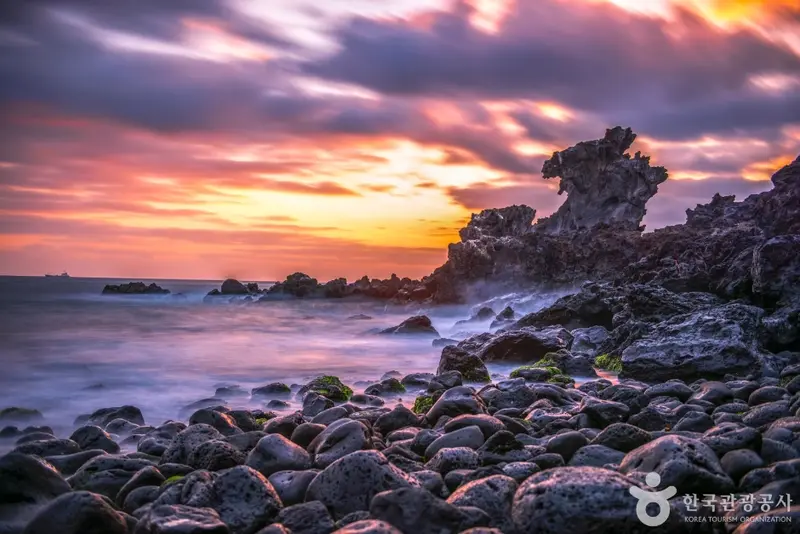
Yongduam RockView on Map용두암
FreeA seaside rock north of Jeju Airport, shaped by waves and wind into a dragon's head. Legend says a dragon that stole a jade bead from the Hallasan mountain spirit was shot down and turned to stone. The coastal road from here to Dodu Port is lined with cafés and restaurants (Korea Tourism Organization).
Learn more →Korea Tours & Tickets →Samdae Guksu HoegwanView on Map삼대국수회관
₩19,000 (US$13.7)One of Jeju's best-known gogi-guksu houses, making noodles from dough prepared each day with meat delivered the same morning. The clean-tasting pork broth is topped generously with boiled pork, and you can also order dombae-gogi — pork sliced on a wooden board (Korea Tourism Organization).
A Jeju specialty of medium wheat noodles in a rich pork-bone broth, topped with slices of boiled pork.
How to eat Add chili seasoning or chili powder to taste.
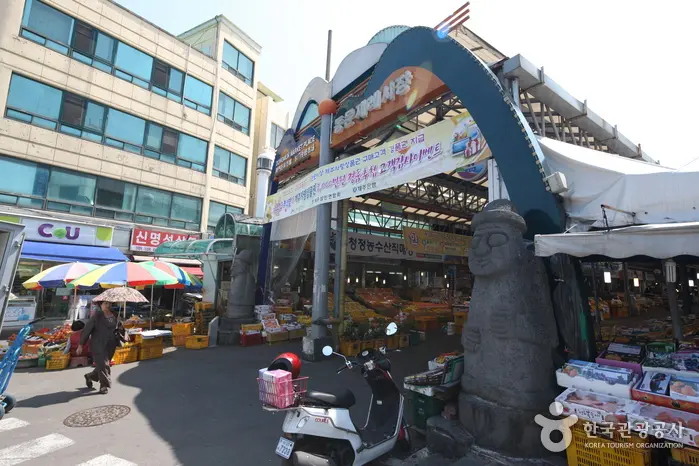
Dongmun Traditional MarketView on Map동문재래시장
FreeJeju's signature permanent market, formed right after liberation in 1945 and moved to its current site after a major fire in 1954. Stalls sell hairtail, mackerel, tangerines and omegi rice cakes, and a night market opens in the evening for street food (Korea Tourism Organization).
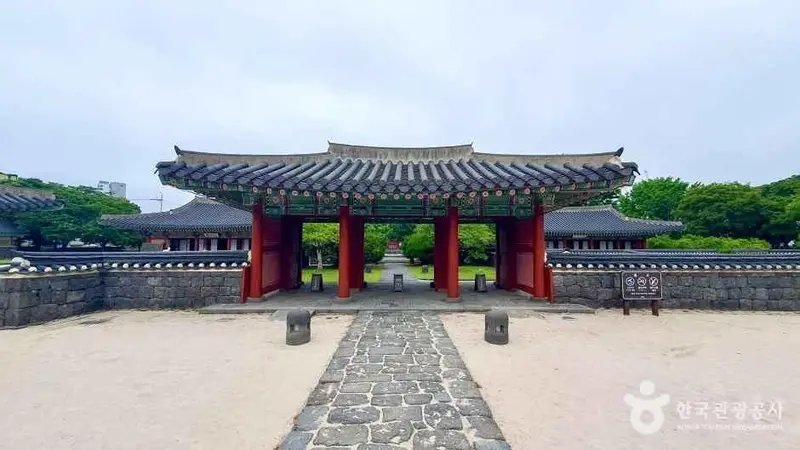
Learn more →Jeju Mokgwana (Jeju Provincial Office)View on Map제주목 관아
FreeThe site of the government office that ruled Jeju in the Joseon era, believed to have hosted key offices since the ancient Tamna kingdom. Demolished under Japanese rule except for Gwandeokjeong Pavilion, its buildings were restored after excavations in the 1990s (Korea Tourism Organization).
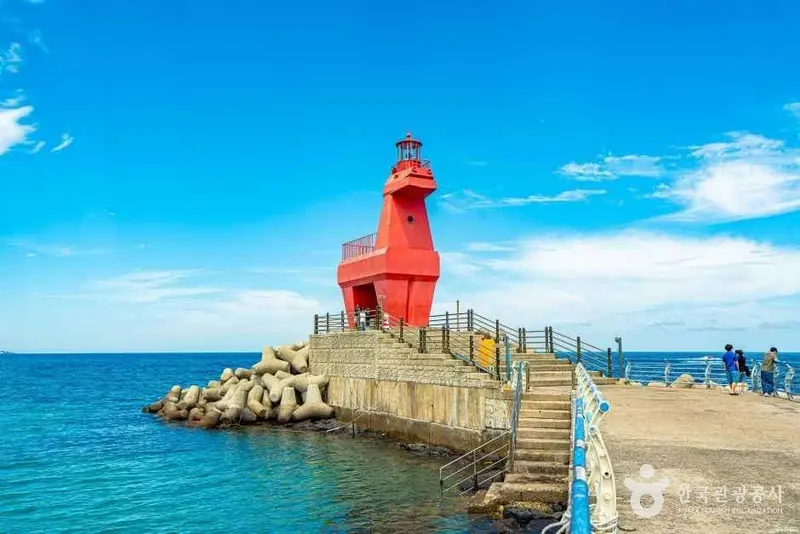
Learn more →Iho Tewoo Horse LighthousesView on Map이호테우 말 등대
FreeA pair of red and white lighthouses shaped like Jeju ponies at Iho Tewoo Beach, the beach closest to downtown Jeju. The two 12 m lighthouses stand on opposite breakwaters and are a famous photo spot; close to the airport, they are great at sunset (Korea Tourism Organization).
Learn more →Dodubong PeakView on Map도두봉
FreeA small volcanic cone (oreum) on the Dodu-dong shore north of Jeju Airport, with a gentle slope you can climb in about 10 minutes. From the top you see the sea and planes taking off and landing on the airport runway (Korea Tourism Organization).
Learn more →Sukseongdo Jeju Main BranchView on Map숙성도 제주본점
₩63,000 (US$45.3)A grill house that ages Jeju black pork before cooking it. The meat alternates between water-aging — vacuum-packed in −1°C brine — and dry-aging with controlled air, temperature and humidity, and the house specialty is making cuts beyond belly, like loin and shoulder, shine (Korea Tourism Organization).
Meat from Jeju's native black-haired pigs, usually thick-cut belly with skin or collar, grilled over charcoal or on a hot plate.
How to eat In Jeju it is often dipped in meljeot (salted anchovy sauce) warmed on the grill.
Ramada Jeju City HotelView on Map라마다 제주시티호텔
₩135,500 (US$97.4)26 min walk to Sinsan Park · About ₩140k per night (standard level · check the real price on Agoda)
Book on AgodaBook on Booking.com →Ramada Jeju City HotelView on Map라마다 제주시티호텔
🍲 Breakfast pick: Eunhuine Haejangguk · 12 min by taxi · about 40 min to eat (skip if your hotel serves breakfast)
Famous for Jeju-style beef haejang-guk. The spicy broth with beef, blood pudding, bean sprouts and dried greens is a classic hangover cure, and the neat side dishes make it a popular breakfast stop (Korea Tourism Organization).
A soup of beef or pork bone broth with dried cabbage leaves, bean sprouts and often congealed ox blood, popular the morning after drinking.
Name The name is said to come from haejeong, a Sino-Korean word meaning to relieve a hangover.
Heads-up It often contains congealed blood (seonji), which not everyone enjoys.
How to eat Rice is usually added to the soup; some places will leave out the blood if you ask.
Hamdeok Beach (Seoubong Beach)View on MapTop 4함덕해수욕장 (함덕 서우봉 해변)
FreeAlso called Hamdeok Seoubong Beach after the oreum beside it. White sand against emerald water makes it one of Jeju's three prettiest beaches along with Hyeopjae and Gimnyeong, and the footbridge on its west side feels like walking on the sea (Korea Tourism Organization).
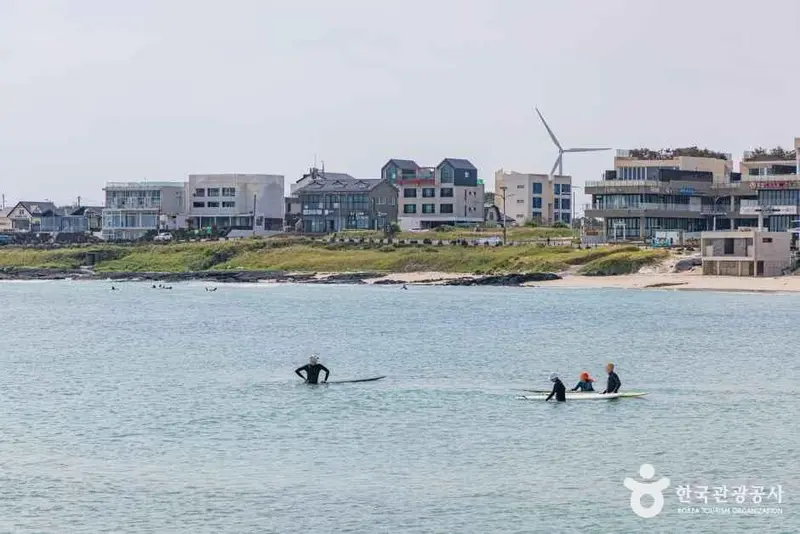
Learn more →Korea Tours & Tickets →Woljeong-ri BeachView on MapTop 15월정리해변(월정리해수욕장)
FreeThe beach of an east-coast village whose name means 'where the moon stays'. Shallow, clear water makes it good for paddling, and the café chairs facing the sea became a famous photo spot, so the shore is now lined with cafés and restaurants (Korea Tourism Organization).
Learn more →Galchi Gongjang (Hairtail Factory)View on Map갈치공장
₩35,000 (US$25.1)A hairtail specialist on the Haemaji coastal road in Pyeongdae-ri. Under a high ceiling with full-length windows onto the sea, you can have braised hairtail, whole grilled hairtail and abalone dishes. It closes at 4:30 pm, earlier if ingredients run out, so come for lunch (Korea Tourism Organization).
Pieces of cutlassfish (hairtail) braised with radish and potato in a spicy soy-chili sauce.
How to eat Watch for small bones; the sauce is often mixed into rice.
Jeju silver hairtail, grilled whole or in pieces with just salt; the flesh is soft and nutty.
How to eat Lift the meat off along the thick central bone.
Sehwa BeachView on Map세화해수욕장
FreeA small beach in Sehwa-ri, where white sand and black basalt appear with the emerald sea at low tide. Right next to it, the Sehwa folk market opens on dates ending in 5 and 0, showing everyday Jeju market life (Korea Tourism Organization).
Learn more →BizarimView on Map비자림
₩6,000 (US$4.3)A nutmeg-yew forest protected as a Natural Monument, where some 2,800 torreya trees aged 500–800 years grow together. A loop trail among the 7–14 m giants takes about an hour, and rare orchids grow wild here (Korea Tourism Organization).
Learn more →Gwangchigi BeachView on Map광치기해변
FreeA beach on the way from Seongsan Ilchulbong to Seopjikoji, where Jeju Olle Trail 1 ends and 2 begins. Lava rocks that cooled on meeting the sea are covered in green moss and emerge at low tide, with Seongsan Ilchulbong rising beyond the black sand (Korea Tourism Organization).
Learn more →Seongsan Ilchulbong (UNESCO World Natural Heritage)View on Map성산일출봉
₩10,000 (US$7.2)A 180 m tuff cone formed by an undersea eruption about 5,000 years ago and a UNESCO World Natural Heritage site. The summit holds a crater 600 m across, and the sunrise from here has long been ranked the finest of Jeju's views. The stairs to the top take 20–30 minutes (Korea Tourism Organization).
Learn more →Ojo Haenyeo HouseView on Map오조해녀의집
₩31,000 (US$22.3)The white building across the causeway from Seongsan Ilchulbong is a haenyeo (women divers') restaurant run directly by the Ojo-ri fishing cooperative. The menu simply lists seafood — abalone, conch, sea cucumber — and the most popular dish is abalone porridge (Korea Tourism Organization).
Rice porridge made by sautéing thinly sliced abalone in sesame oil and simmering it with soaked rice. Some places add the abalone innards, which turn it a greenish color.
How to eat Usually eaten with salty side dishes such as kimchi or pickles.
Jeju Stay Inn Seongsan HotelView on Map제주스테이인성산호텔
₩135,500 (US$97.4)25 min walk to Aquaplanet Jeju · About ₩140k per night (standard level · check the real price on Agoda)
Book on AgodaBook on Booking.com →Jeju Stay Inn Seongsan HotelView on Map제주스테이인성산호텔
SeopjikojiView on MapTop 18섭지코지
Free'Koji' is Jeju dialect for a cape jutting into the sea, and this headland pokes out from the Sinyang-ri coast in Seongsan. Walk the broad, flat hill to the lighthouse for views of Seongsan Ilchulbong and the sea; canola flowers bloom here in spring (Korea Tourism Organization).
Learn more →Korea Tours & Tickets →Dangke Olle GuksuView on Map당케올레국수
₩23,000 (US$16.5)A noodle house near Pyoseon Beach whose signature is thick, peppery bomal (sea snail) kalguksu. Rice is added to the noodles, so it feels like porridge and noodles in one bowl; there's also bomal porridge with hot peppers, sea urchin kalguksu and gogi-guksu (Korea Tourism Organization).
Knife-cut noodles cooked with bomal — small sea snails from Jeju's shoreline rocks; their innards turn the broth greenish and rich with the taste of the sea.
How to eat Spoon up the thick broth with the noodles; add chili paste if you like.
SoesokkakView on Map쇠소깍
FreeA deep pool where the fresh water of Hyodoncheon Stream meets the sea; the name means 'cow–pool–end'. Clear water lies between lava rock formations and pine woods, and a trail along the gorge makes for a pleasant walk (Korea Tourism Organization).
Learn more →Jeongbang FallsView on Map정방폭포
₩4,000 (US$2.9)One of Jeju's three great waterfalls with Cheonjiyeon and Cheonjeyeon, and a rare waterfall that drops from land straight into the sea. Legend says Xu Fu, sent by the First Emperor of Qin to find the elixir of life, carved his name on the cliff here before leaving (Korea Tourism Organization).
Learn more →Lee Jung-seop StreetView on Map이중섭거리
FreeA street built around the thatched house where painter Lee Jung-seop lived with his family as a Korean War refugee. His residence and the Lee Jung-seop Art Museum are close by, and craft shops, studios and small restaurants line the way (Korea Tourism Organization).
Learn more →Seogwipo Maeil Olle MarketView on MapTop 5서귀포매일올레시장
FreeSeogwipo's largest market, which grew up naturally in the early 1960s, with shops lining a 620 m covered arcade. It's packed with snacks — omegi rice cakes, tangerines, black pork skewers and sashimi — so it's a good pre-dinner stop (Korea Tourism Organization).
A traditional Jeju rice cake made from glutinous millet dough, boiled and coated in red bean or soybean powder. Today's versions often include mugwort.
Name The name is said to come from a Jeju word for the millet dough used for rice cakes and liquor.
How to eat Often kept frozen and eaten after thawing slightly.
Sambo SikdangView on Map삼보식당
₩24,000 (US$17.2)A local restaurant in downtown Seogwipo named 'Sambo' (three treasures) for the three Jeju classics it serves: ttukbaegi seafood stew, jari-mulhoe (cold damselfish soup) and grilled tilefish. The popular ttukbaegi is loaded with small abalone, seafood and sea urchin roe (Korea Tourism Organization).
A Jeju stew of small abalone, crab, shrimp and clams simmered in doenjang broth in an earthenware pot.
How to eat Pick out the seafood first, then enjoy the broth with rice.
Red tilefish, a Jeju specialty, cleaned, half-dried and grilled until golden.
Cheonjiyeon FallsView on MapTop 8천지연폭포
₩4,000 (US$2.9)A waterfall dropping from a 22 m cliff into a pool 20 m deep, carved from lava about 400,000 years old and the Seogwipo Formation beneath it. It is lit until 10 pm, making it a good evening walk (Korea Tourism Organization).
Learn more →Shinshin Hotel CheonjiyeonView on Map신신호텔 천지연
₩135,500 (US$97.4)11 min walk to Cheonjiyeon Falls · About ₩140k per night (standard level · check the real price on Agoda)
Book on AgodaBook on Booking.com →Shinshin Hotel CheonjiyeonView on Map신신호텔 천지연
Oedolgae RockView on Map외돌개(제주)
FreeA 20 m sea stack standing alone in the water, and the start of Jeju Olle Trail 7. It's also called 'General Rock', from a tale that General Choe Yeong dressed it as a general to scare off enemies, and 'Grandmother Rock', after a woman who waited for her husband lost at sea (Korea Tourism Organization).
Learn more →Korea Tours & Tickets →Saeyeongyo BridgeView on Map새연교
A footbridge linking Seogwipo Port and Saeseom Island, opened in 2009 and modeled on Jeju's traditional 'tewoo' raft. Across it a trail circles Saeseom, with views of Munseom, Beomseom and Hallasan, and the bridge is lit up at night (Korea Tourism Organization).
Learn more →Jangmo SiktakView on Map장모식탁
₩30,000 (US$21.6)A stone-pot rice specialist in Ido 2-dong, Jeju City. The signature Jangmo set is a home-style spread of abalone stone-pot rice with stew, soy-marinated crab, marinated abalone, spicy pork and side dishes — and it's close to the airport, perfect for a last meal (Korea Tourism Organization).
Rice cooked in a stone pot with abalone and its innards, which give every grain a rich, nutty flavor.
How to eat Scoop the rice into a bowl and mix with seasoning sauce, then pour hot water into the pot to finish with scorched-rice soup.
Jeju AirportView on Map제주공항
i
| Tier | Per person, per meal | Basis |
|---|---|---|
| Budget | ₩9,000 | Avg. of 4 everyday meals ₩8,920 |
| Standard | ₩12,000 | Avg. of all 7 ₩11,610 |
| Generous | ₩18,000 | Avg. of 2 special dishes ₩17,373 |
| Dish | National avg. |
|---|---|
| Jajangmyeon | ₩7,230 |
| Kalguksu | ₩9,057 |
| Kimchi stew set meal | ₩9,080 |
| Bibimbap | ₩10,314 |
| Naengmyeon | ₩10,845 |
| Samgyetang | ₩16,868 |
| Pork belly 200g | ₩17,877 |
Related Photos
Related videos
 ▶17min
 ▶21min
 ▶25min
 ▶28min
 ▶16min
![[Seo Ki Log] 30s Jeju School Trip: Avoiding Tourist Traps](https://i.ytimg.com/vi/yVeHv3qzbNc/mqdefault.jpg) ▶19min
▶19min
 ▶13min
 ▶2min
▶2min
Comments
Leaving a comment or a like counts as agreeing to the community posting terms. Read the posting terms